Cabinetry in Austin, TX

Notes on cabinetry in Austin, TX: painted and stained finishes, two-tone runs, open shelving, cabinet lighting, and how finishes age in strong Texas light.

What We Cover

Cabinetry in Austin, TX

Cabinetry in Austin, TX is shaped by the light and the air as much as by the floor plan. A kitchen in Tarrytown with a wall of west glass and a galley in a Clarksville cottage ask different things of a door, and the crew builds and finishes with that in mind. Boxes are built from plywood or solid hardwood, faces are cut as shaker, slab or raised panel, and the finish is chosen last, after the room has been looked at in morning and evening light.

Painted and stained finishes

A painted finish gives a clean, even colour and can be refreshed in place. A stained finish shows the maple, oak or birch underneath and deepens gently with age. Summer sun across Travis County is hard on both, which is why test boards go up on the real wall before a colour is signed off. Two-tone runs, with a darker lower and a lighter upper, are common in the older bungalows around Hyde Park and Travis Heights.

Doors, shelves and light

Open shelving, a glass-front door and a strip of cabinet lighting each change how a room reads at night. The crew fits soft close hinges, checks the reveal along every full overlay or inset door, and looks at pulls and knobs against the finish before drilling. Kitchens near the Colorado River and Mueller are warm and damp in summer, so edges are sealed before anything is installed.

Care and touch-up

Most finish damage starts at the places hands land, around pulls and knobs and along the lower door edge. Mild soap, a dry cloth and a small touch-up kit handle most of it, and the Balcones Fault clay under many east side homes explains the hairline cracks that sometimes open at a painted joint over time.

Guides

The pages here cover painted against stained finishes, conversion varnish against brushed paint, two-tone planning for small kitchens, open shelving and glass-front doors, cabinet lighting and finish colour, and everyday care and touch-up. Longer posts take up related questions for homes in Austin.

Latest Guides

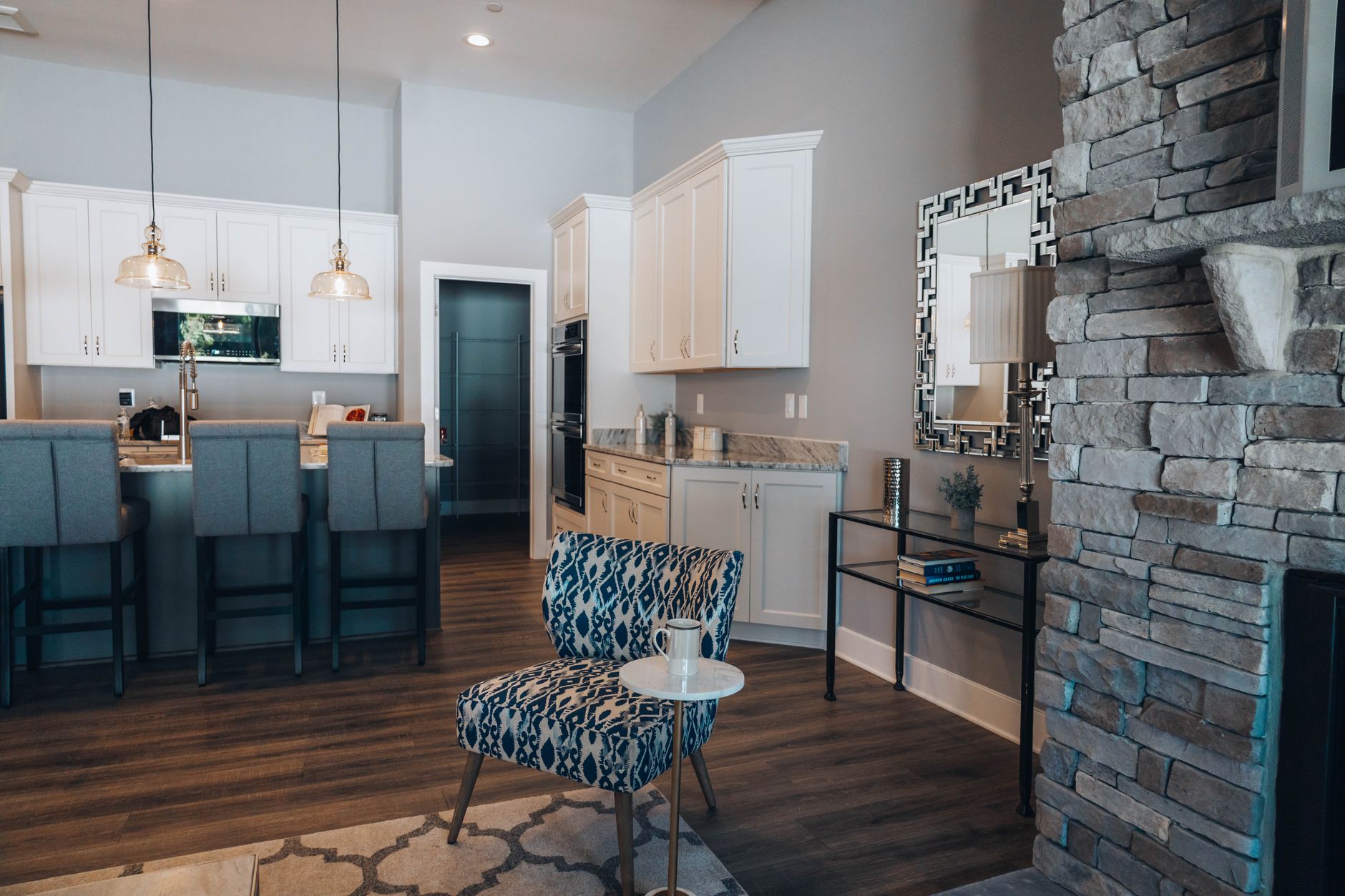
Contemporary kitchen interior featuring a stone fireplace, modern cabinetry, and chic furnishings in Austin, TX

Choosing Pulls and Knobs for Kitchen Cabinets in a Hot, Humid House

2026-10-06

Hardware is the last thing bought and the first thing touched. Every cabinet door in an Austin kitchen is opened and closed many times a day, and the pull or knob takes the whole load of that habit. It also takes the first wear on the finish. Choosing hardware well is partly about looks and partly about leverage, spacing and how the metal will behave in a hot, humid house.

Which style of pull suits which door?

A shaker door has a flat centre panel framed by a rail and stile, and it takes almost any hardware. A bar pull reads clean and modern on a shaker front, and a round knob reads traditional. A slab door, with no frame at all, shows hardware more than any other style, so a long, thin pull or an edge pull that disappears into the top of the door looks deliberate. A raised panel door is busier and tolerates a simple knob or a small cup pull better than a large, ornate piece, which fights with the profile.

Inset doors, which sit inside the face frame instead of in front of it, need hardware with a short projection, because the door has almost no overlap and a bulky pull catches the frame edge. A full overlay door can carry a more generous pull, and a partial overlay door on an older face frame should have a pull sized to the narrow strip of door that is visible.

A quick guide by cabinet and use

Where it goesWorks wellWatch for
Upper door, full overlaySmall knob or short bar pull near the bottom cornerA pull too long for the stile, which then hits the neighbouring door
Base doorKnob or bar pull near the top cornerHardware set too low, which makes bending the only way to open the door
Wide drawerLong bar pull, centred, or two knobs spaced evenlyA single small knob that twists the drawer box as it opens
Deep pot drawerLong pull, set high on the frontPulls with sharp ends that catch an apron or a sleeve
Glass-front doorSmall knob or slim pullThick backplates that cover a narrow frame
Pantry or tall doorLong vertical pull at hand heightHardware placed to match the other doors rather than the hand

Spacing and size, the mechanical part

Pulls are measured between the screw centres, and the measurement has to match the holes in the door exactly. Common spacings come in a small number of sizes, so a kitchen being refitted can often reuse existing holes if the new pull matches. When the old holes cannot be reused, they have to be filled, sanded flush and refinished, and the repair shows in a glossy finish if it is rushed.

A good rule for length is proportion: on a base door of ordinary width, a pull roughly a third of the door width looks right, while on a long drawer the pull can run a good part of the width. A bar pull that is too short for a heavy drawer concentrates the pull on a small point, and the drawer box racks as it opens. Two knobs spaced across a wide drawer give a more even pull than one.

The screw also matters. A screw that is too long pushes through the back of a thin door and shows, and one that is too short strips the thread in the wood. A drawer front on a dovetail drawer box often has a double thickness at the front, which needs a longer screw than the door beside it. Washers or a small spot of thread locker keep the hardware from loosening as the doors swing, which they do within a year if left alone.

How does hardware affect the finish?

The wear patch around a knob is skin oil, sunscreen and kitchen film settling at the one place everyone touches. Painted finishes show it as a dull, slightly yellow halo, and stained finishes show it as a darker, glossier patch. A harder topcoat resists it longer, and a quick wipe with mild soap on the door around the pull keeps it from building.

Heavy hardware can crush the finish when it is tightened, so a thin washer or a small felt pad under the backplate protects the paint. Cheap hardware with a rough underside scratches painted doors as it is turned, and a soft clear bumper on the back of a knob is a minor fix that saves a repaint. On a stained door of maple or oak, a pull set on the grain line looks tidy, while one set across a visible seam can look accidental.

Which metal finish holds up in a hot, humid kitchen?

Metal finishes behave differently in the heat. Solid brass and bronze darken slowly and develop a patina, and some owners like the aged look while others find it uneven. Lacquered brass keeps its shine until the lacquer wears, usually at the point where fingers rest, and then it tarnishes in patches. Stainless steel resists corrosion and keeps its colour. Matte black is a coating, so it can wear to bare metal at the touch points, and the contrast looks worse than a plain finish that ages evenly.

Kitchens near water, such as those around Lady Bird Lake, the Colorado River or Barton Springs Pool, are damp for much of the summer, and hardware near the sink sees the most moisture. Hardware that is plated over a soft core can bubble if water gets under the plating, so a solid metal pull near the sink is the safer pick. In dry stretches in the Texas Hill Country air, the same hardware is rarely a problem, so the choice depends on how the kitchen is actually used.

Matching hardware to light and colour

Hardware is a third colour in the room, after the cabinet and the wall. Brass on a deep green or navy lower run stands out against pale uppers, and black pulls on a white run give a graphic, strong line. Brushed nickel and stainless sit quietly against both warm and cool colours, and that makes them the easy choice for a kitchen that may be repainted. Cabinet lighting changes this again, since a warm light brings out brass and a cool light flattens it, so the hardware sample belongs under the strip lights that will be used.

In the small kitchens of Hyde Park, Travis Heights and Clarksville bungalows, restrained hardware that matches the era usually looks right: simple knobs on doors and bar pulls on drawers. Larger kitchens in Tarrytown and Mueller carry longer pulls and a stronger metal contrast without overwhelming the room.

Soft close and the feel of the door

Soft close hinges and drawer slides change how much force the hardware must take. A door that closes itself gently needs only a light pull to open, so a small knob works. A heavy drawer on a full-extension slide benefits from a long pull, which spreads the load across the hand. Slides with a push-to-open mechanism need no hardware at all, but they leave fingerprints on the door face, which a finish with a hard topcoat handles better than a soft one.

Fitting and checking the work

Use a drilling template, not a ruler and a pencil, because a one millimetre error is obvious on a long row of doors. Mark every hole before drilling, and drill through the door with a backing board behind it so the exit side does not chip. Test the pull on the first door before drilling the rest, and hold it in place for a day or two if there is any doubt about the height. After fitting, check each door and drawer by hand: the pull should feel stable, the door should close without catching, and the reveal around each door should be even.

Keep the extra screws and a spare pull in a labelled bag in a drawer, along with the touch-up paint and the finish name. A missing pull a year later is easy to replace when the spacing, the finish and the screw length are written down.

In short

Pick pulls and knobs by door style, hand height and the metal that suits the room's moisture and light. Then fit them with a template and check every door by hand.
Read more →

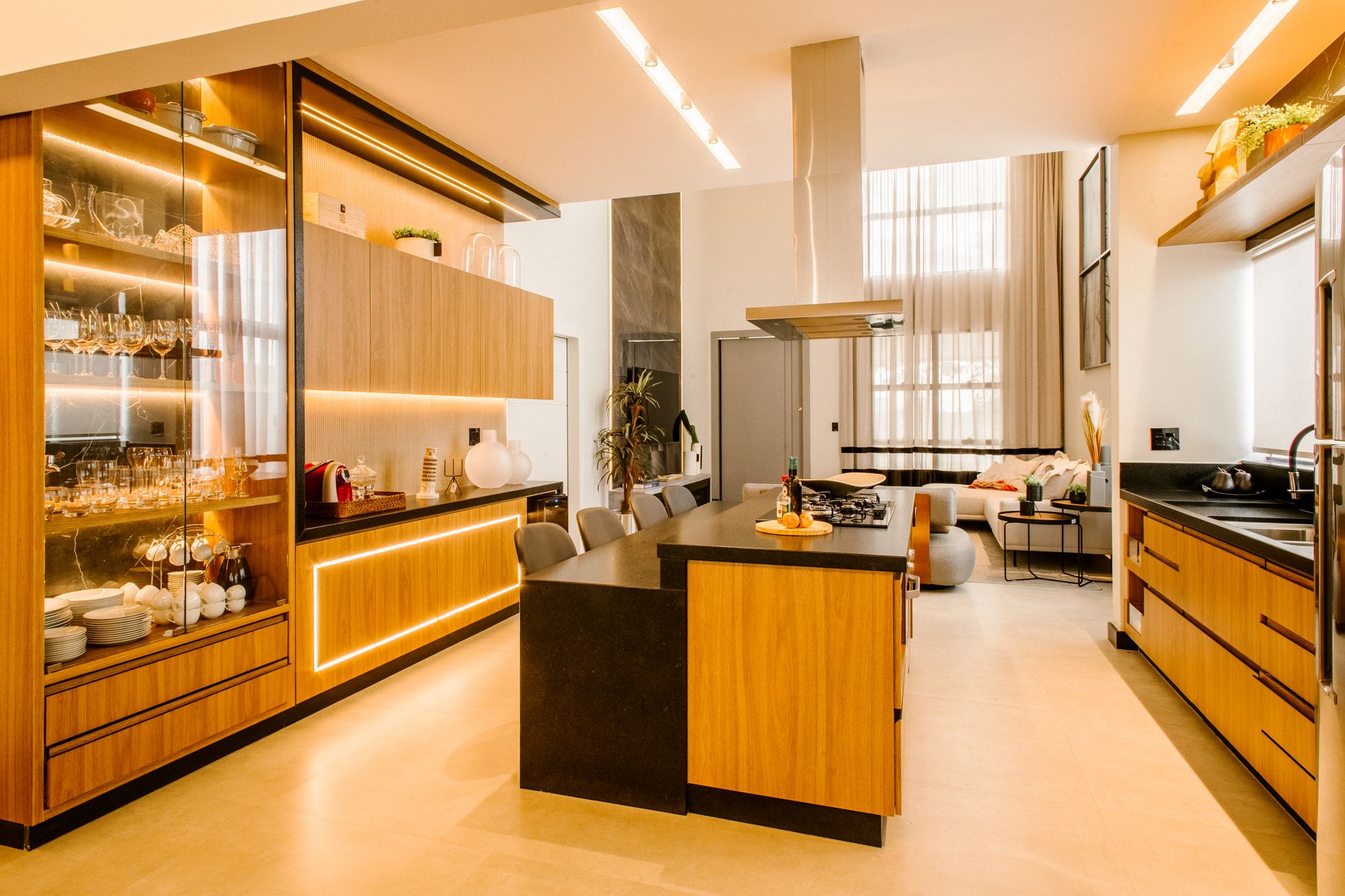
Sleek modern kitchen featuring wooden cabinetry and elegant lighting in Austin, TX

Questions Austin Homeowners Ask Before Refinishing Kitchen Cabinets

2026-10-06

Refinishing is the quiet middle option between living with tired cabinets and tearing them out. The boxes in many Austin kitchens are sound, built from plywood or solid hardwood decades ago, and only the surface has given up. What follows answers the questions that come up most often before a refinishing job starts, from how long the work takes to what happens to the hinges, written from the shop floor side of the work.

What does refinishing actually involve?

Refinishing means keeping the existing doors, drawer fronts and boxes and replacing the coating on them. The doors come off, the hardware comes off, and each door is numbered on the hinge side so it returns to the same opening. Old grease and polish residue are removed first, because any sanding over silicone polish drives it into the wood and the new coat will fish-eye. Then the old finish is scuffed or sanded, flaws are filled, a bonding primer goes on if the job is painted, and the new coating is applied in thin, even passes.

Refacing is a different job. It keeps the boxes and replaces the doors and drawer fronts, usually with a new door style. A kitchen that needs a new look and a new layout of doors is a refacing candidate, while a kitchen that only needs fresh colour on a good door style is a refinishing candidate.

How long does a refinishing job take?

Most of the time goes to drying and curing, not to the visible work. Doors usually leave the house for several days so they can be sprayed in a clean booth and cured flat. The boxes are done in place and need masking, drop cloths and ventilation, which is its own routine in a house with an open kitchen. A typical kitchen is out of service for the doors for about a week and a half, and the finish still keeps hardening for weeks afterward. During that period the surfaces are tender, so no heavy loads in the drawers, no tape on fresh paint, and no harsh cleaners.

Can stained cabinets be painted, and can painted ones be stained?

Stained cabinets can be painted without trouble. Open-grained woods such as oak need grain filler first, or the grain shows through as a texture under the paint. Some owners like that texture, and some do not, so a sample door is worth making before the whole kitchen is committed.

Going the other way is much harder. Paint sits in the pores and the corners of the profile, and getting it all out leaves a patchy colour that a stain will not cover evenly. Painted maple or birch doors that are meant to turn back into stained doors usually need to be replaced, and that is a refacing job. A flat slab door made of mdf can never be stained at all, since there is no wood grain to show.

What about thermofoil and melamine?

Thermofoil is a vinyl skin heated and pressed over mdf, and melamine is a paper layer fused to a board. Neither one takes paint easily. Thermofoil that has started to peel near the oven or the dishwasher is a sign of heat damage, and the fix is usually new doors on the old boxes. A melamine box in good condition can stay, because it is the door faces that carry the look of the kitchen.

Does Texas weather change the plan?

It does, in a few specific ways. Summer light through west windows fades dark paint and stain on the sunny side of the room faster than on the shaded side. A kitchen in a bright house near Lady Bird Lake or on a hillside facing Mount Bonnell should get a topcoat with ultraviolet protection, and the colour should be chosen with that fading in mind. Humidity matters at the sink wall, where an unsealed mdf edge swells under paint, so edges are sealed with primer before the colour goes on.

Seasonal swings in the clay soils that sit east of the Balcones Fault also move older houses a little. A cabinet that was snug in the winter can show a hairline crack at a painted face frame joint the following summer. A flexible caulk at the joint and a tight, thin paint film are the best defence, and a very thick coat of paint is the worst, because it cracks first.

Is spray better than brush?

For doors, spraying gives a flat, even film with no brush marks and a faster cure. A two-part conversion varnish or a catalysed paint gives the hardest film, and it is the standard choice where the cabinets take daily wiping. Brushing and rolling can look very good when the painter levels the paint with a conditioner, and it makes sense for boxes that stay in the house. Many jobs combine both: sprayed doors in a booth, and brushed or rolled face frames in place.

What happens to the hinges and the hardware?

Hinges are removed, cleaned and refitted, or replaced if they are tired. A euro hinge is adjusted in three directions after the doors return, which brings every reveal back to an even gap. If the old hinges were the surface-mount type with a visible barrel, a switch to concealed hinges is a bigger carpentry change and belongs in a refacing scope.

Pulls and knobs are a good time for a decision. Existing holes can be reused if the new hardware matches the spacing, or they can be filled and refinished if the hardware changes. The filling matters: a patched hole that was not sanded flush shows through a glossy finish for years. A hardware swap that leaves holes open to the edge of the new backplate looks careless, so the plan for pulls and knobs is settled before painting, not after.

How is colour chosen?

Colour is chosen on a real door, in the real kitchen, in more than one kind of light. A sample painted on a spare door and hung in place for a week shows how it behaves at morning, noon and evening. Under-cabinet lighting changes the picture again after dark, because a warm strip pulls whites toward cream and a cool strip pushes them toward grey. A good sample is the cheapest insurance against a repaint.

Older houses in Hyde Park, Clarksville and Travis Heights often have small kitchens with a lot of trim, and a single colour on the cabinets with a slightly deeper one on the trim reads cleanly. A larger kitchen in Mueller or Tarrytown can take two tones, with a darker lower run and lighter uppers.

Which finish lasts longest?

The hardest films come from catalysed coatings such as conversion varnish, and a well-built water-based enamel with a hardener comes close. Standard wall paint, even a good one, is soft and takes a long time to cure on a cabinet, and it marks easily. The prep matters as much as the product: a hard coating on a poorly cleaned surface peels, and a modest coating on a perfectly prepared surface lasts.

Can a damaged door be repaired before refinishing?

Often, yes. Small dents in solid wood can be steamed out, chips in a rail can be filled and sanded, and a cracked panel in a raised panel door can be glued and clamped. A door with a swollen mdf core or a blown thermofoil face is not worth the repair, and a replacement door in the same style is a better path. The shop matches the replacement to the finish, so it reads as part of the original set.

What should be done before the crew arrives?

Empty the cabinets, because every drawer and shelf is touched during prep. Clear the counters, cover or move small appliances, and ask where the doors will be cured so there is a clean place for them. Mention any previous paint jobs and any cleaning products that were used, since a heavy silicone polish habit changes the prep. Decide on the hardware and colour in advance, so the shop can order and test without holding up the schedule.

After the job, treat the surface gently for a few weeks. Wipe with a soft cloth and plain water, leave a small gap between doors and drawers until the film has hardened, and keep the touch-up paint labelled and stored somewhere cool and dry.

A short word to close

Refinishing suits sound cabinets with a tired surface, and it fails mainly when the prep is rushed. A sample door, a hard topcoat and a sealed edge deal with most of what Austin weather throws at a kitchen.

Read more →